Coming Up Next (00:00)
Coming up next on the White Squall podcast.

Bill Steele (00:04)
And then when they got to us, right when they got to us, one of s looked toward the entrance and said, Look and when we looked, my

God, you know, there was the tsunami. There was a wall of water down the passage. And so there was a boulder right there. We climbed up on that, but we knew that it would inundate that. And there was a seventy five foot waterfall right behind our backs. And that's when I I said something that I shouldn't have said. And I learned a lesson there and that was we're gonna die now. Well, that's a showstopper right there. I

Brandon Kowallis (00:38)
Yeah.

Bill Steele (00:39)
talked to a couple of s combat vets

That said, you don't say that. Even when you think it's a certainty, you don't say that. Because some people shut down. Totally shut down. Quit. Gonna die. Okay. And that's what happened.

WS Podcast Intro (00:56)
Man overboard!

Vocals (01:10)
Hello, my friends, and welcome to

Music (01:12)
you

Vocals (01:12)
another episode of the White Squall Podcast. I'm Brandon Kowalis, Cave Explorer, Outdoorsman, and host of this show. In this podcast, we dive deep into the incredible adventure stories of extraordinary people from all walks of life. Individuals who have pushed themselves or been pushed by outside forces far beyond their limits to brave the unknown. From the miraculous and heartwarming,

To the terrifying and death-defying, we'll examine how the lessons they've learned can inspire and guide us all. And if after this episode you're itching for more adventure and incredible insights, check out my latest book, Cursing Mountains. In this inspirational novel, I take readers on a journey into my own insights from the challenges I've faced as I've pushed myself beyond my own comfort zone, both above and underground. It is packed.

Full of timeless wisdom that can help you find direction along your own comfort zone expanding journey.

Boom Rumble (02:16)
you

Bill Intro (02:18)
Today's guest is Bill Steele. Bill is a prominent American speliologist and deep cave explorer with a career spanning over five decades. He's best known for his decades-long leadership over expeditions into Mexico's Sistema Huautla the deepest cave system in the Western Hemisphere, which has been mapped to a depth of over 1,500 meters

Meters. For those of you who don't speak, the metric system that would be around 4,900 feet deep, almost a mile underground. A fellow of both the National Speleological Society and the Explorers Club, Steele has mapped hundreds of cave networks across the United States, including Kentucky's Mammoth Cave System, which is the longest cave system in the entire world.

And he's participated in international caving expeditions to China and Cuba. In 2018, get this, Mexican researchers named a newly discovered species of cave dwelling tarantula in his honor. I'm gonna try not to slaughter this. Hemirrhagus billsteelei

Parallel to his subterranean exploration, Steele spent 34 years as a professional executive with the Boy Scouts of America. During this tenure, he played a pivotal role in, no surprise, shaping the organization's outdoor program, most notably spearheading the creation of the official BSA Exploration Merit Badge. C. William Steele, that's his full name. If you're looking him up about to find his books, he has authored two major books documenting his expeditions in Mexico, including

Yochib, the river cave, which was published around 1985, and which chronicles the perilous mapping of a complex river cave in Chiapas, Mexico, which we are going to dive into today. and Huautla 30 Years in One of the World's Deepest Caves, that was published around 2009. It's an autobiographical and historical account of the multi-decade exploration in.

Sistema Huautla And now for my conversation about Sumidero Yochib and Huautla with Bill Steele.

Boom Rumble (04:39)
you

Brandon Kowallis (04:41)
so back in my late teens.

I actually had the opportunity to serve a two year mission for my church down in Mexico. And and I just I fell in love with the country and the people down there. And then I got back and my dad and my brother had gotten super into caving. And a few years later I had the opportunity to go on some of the Mexican expeditions. So I went on

one of Bill Stone's expeditions down there was the one where they found J2

so what was it exactly that that turned you on to Mexico?

Bill Steele (05:14)
Actually it was a picture.

A picture.

after Golondrinas was found,

there was an article about the first descent of Golondrinas and there was this picture of somebody hanging out in free space, not anywhere near a wall. And I just thought to myself, Wow, that that looks like something I'd like to do.

And I went to the public library to see if there were books about caving. And God that lo and behold there was a whole shelf of

and then I got into vertical caving while I was in college. I tried it a little bit before that with scouts, but but really learned how to do it when I went to Indiana University and there was good a grotto there and a good caving club at the university.

And then r at the end of sixty eight I went to Surprise Pitt in Alabama and and met Richard Schriver there and he'd already invited me to come to Ellison's 'cause they just found it. Deepest free fall of Pit in the United States at the time.

But while I was there

In in July of sixty-nine, we had we had found Incredible Pit on the other side of the mountain in May, and then in July we did a crossover. We had two teams, one going one way go out the other way and vice versa. And there were these Canadians from McMasters University at Hamilton, Ontario, who were actually Brits, and the famed Karst hydrologist Derek Ford had brought them

over he was British and he brought over and they were h they were really hot shot cavers. They had wetsuits. I'd never seen one. And they they were on the other team but we camped together and they had been to Huautla the year before and and they had a geologist among that was pretty darn sure the deepest cave in the world was there. And I had that in my mind. And I was invited to go with them in sixty nine. I was only twenty years old. but

You know, I was in college and I was barely making it financially and and that meant not working over Christmas and that was irresponsible so I didn't do it. And I've always regretted it. But, you know, I've caught up. I've done it. I've been on twenty eight expeditions there.

Brandon Kowallis (07:32)
You know, one of the things that that I find particularly fascinating and exciting about Mexico is it's the potential not just for virgin cave, but significant virgin cave systems. I mean, it's like even thirty years after you guys had done some of that first exploration of some of the bigger cave systems, it seems like there's still just

A ton of potential in Mexico.

Bill Steele (08:00)
yeah. yeah. There's big areas of of karst, with with thick limestones that haven't been looked at.

We can see one from Huautla from the highest entrances of Sistema Huautla looking to the north. There's a big massif of limestone. And only two guys have ever gone up on it, and they were Australians. And you know, it's challenging, it's remote. nobody lives up there. There's n probably no water 'cause it all goes underground right away. You'd have to have a good catchment system. I mean it can be done and it will be done someday, but it hadn't been done yet. Yeah.

Brandon Kowallis (08:31)
So

back in the seventies, Mexico would have been a different place than it is today. And I'm curious how you have seen it change over the years

Bill Steele (08:42)
caving didn't even happen there for several years from from when the Canadians pulled out, until we started. And that was because of something totally unrelated to to caving and that was that Huautla happens to be the the type locale for magic mushrooms. That's where they were discovered. Psilocybin was discovered there And once word got out about that, hippies flocked there and

And it got out of hand and finally they the government sent the army in there and chased everybody out and that meant cavers couldn't go in there either. And then in seventy round seventy six I guess, seventy-five, seventy-six, we heard cavers heard that a French Canadian group had gotten in that area and a Mexican caving group had gotten in and they were just seeing what had already been done. And the way they got in, there was a army roadblock on the road where you first.

start up into those mountains and they had a letter from the Mexican consulate in Ontario and and the Mexicans I suppose had the same kind of thing and you know it looked official. They they were

They were being asked to let these people through 'cause they weren't connected with the kind of stuff that they were trying to stop. And in fact, the first time I sat across the desk of the presidente of the municipio there in Huautla right in front of me, under glass, positioned so that it was to be read by whoever was sitting there, was a letter from the general of the army of Oaxaca that said that no hippies or un other undesirable people were welcome in the area. And I remember we spot we pointed at that and said, Well, that's not us

We're cave explorers. We're here to help you.

Brandon Kowallis (10:25)
And and they bought it.

Bill Steele (10:27)
Well, it was true, you know, and they could

Brandon Kowallis (10:29)
Yeah.

Bill Steele (10:29)
kinda they could kinda read, you know, truth. You know, we weren't we weren't bullshitting And and sure enough, you know, we've had excellent relations with the elected heads of government there ever since, always. And you know, if we had w we had a big we had a big problem this year. We did. And

Brandon Kowallis (10:48)
Really? What

was that?

Bill Steele (10:50)
It was the last thing in the world you would ever imagine.

But what happened was there's this guy up the valley who's essentially the cultural icon of the Mazatec people. He's educated, he's he's been a teacher, they call him professor,

he teaches the indigenous language how to read and write it. But anyway, this cultural icon, Javier, walked up to me in twenty eighteen as the expedition was ending, leaving, done

Driving home and he had a flash drive and he said my life's work on here. Can you bring back a hundred copies next year? What are you gonna say, you know? Yes, yes. So we drove halfway home, halfway back to the States before we had a chance to put that into a laptop and see what we just committed to. And it was a hundred pages in color, and of of all these illustrations of different things, dogs, cats, birds, whatever, and then the word in Spanish.

in the word in Mozateco. And it was like, man, a hundred times a hundred, ten thousand color pages. How in the world?

Are we gonna do that? But we said we would. So I found somebody to do it for free. And they did it a hundred and eighty booklets. We brought back to him. So he loved us, you know, we really came through. So what did he do that messed us up? He drove through one day right between the buildings that we rent in this little village, and he just lives, you know, a kilometer away. And he took a bunch of pictures and shot a video. Well he posted it on his Facebook page and he has twenty seven thousand

Mm-hmm.

7,000. It's gotta be everybody in those mountains. That's on Facebook. Well, out of 27,000, how many are going to be negative about these foreigners being there? And what are they really up to? And what are they really taking out of those caves?

so what do we do about it? Well, you know, we worried because there were comments on Facebook that well, we need to go down there where they are and

And see what they've got. See what they got in those buildings. What are they taking out of there? They got uranium, they got they got gold, they got diamonds, they got you know. There was even somebody said, I know what they're taking, they're taking water and they're gonna bottle it and Nestle's is gonna sell it. Come on. You guys can catch the water before it goes in the caves It's easier than getting

Brandon Kowallis (13:11)
Right.

Bill Steele (13:12)
it out of the cave

And we've told them over and over and over and over again that no, all we take out is photographs, knowledge that we'll share with you, and experiences that enrich our lives. That's the truth. That's what we take out of the caves. But they don't believe us, they've been exploited

by people for five hundred years or more, you know. Even the Aztecs made contact up there and demanded tribute. So,

We went into the see the the head of the local government, the the elected presidente, and we said, We want to give a public presentation. We've done it before, we haven't done it in

Two or three years, we wanna do it now. But what we'd like to do different this time is for you to promote it. It's for you to design an invitation and put it on all means of of social media. And they did. And and we used their big lecture hall, which seats about two hundred and fifty people there in the government building, and we did it. But we did it on a particular date. We did it on on the Saturday night of the third week of a four week expedition. Why that night? Because that was the night before.

Okay.

the scientists that were with us were leaving. And we had a Mexican biologist, we had a Mexican paleontologist, we had a a Mex a second Mexican biologist who is the tarantula expert of the country, maybe of the world. And he's been coming there for at least ten, twelve years and made a name for himself. He's published all these papers about troglobitic tarantulus. And we also had the leading expert in the whole world on

paleoclimatology. And he has studied in Mexico and he really wanted to study stalagmites from Sistema Huautla And he's got one that we found falling over, laying in four pieces on the floor, probably fell in an earthquake, which was six hundred and fifty thousand years old.

complete

climate data for that span of time. And it looked like it fell over a hundred and fifteen thousand years ago. So he wanted us to find one that looked younger, smaller, that had fallen over, and we found one. And it turned out that that gave him the continuum to to today, essentially to today. And that's really cool stuff. Rain patterns, climate temperature up and down patterns. He knows when there was monsoons, when there were long droughts, when there were temperature peaks and falls and man it's

cool study. So we had these guys give these talks and the and the locals that came to to complain to us were sort of looking at each other like, this is kinda cool.

Brandon Kowallis (15:42)
You know, it it makes me think just how how those kind of things like hinge on relationships. And I think about the time that I spend in Mexico, it's it's not just the relationships with the government, but also the relationships with the local people that can totally make or break an expedition down there. And I think that's just life in general. Like the more you have positive relationships with the people around you, the more opportunities that seem to present themselves.

Bill Steele (16:08)
Well one thing I tell expedition members that go with us to Huautla, and and we have two team meetings during a four week expedition. We have one at the beginning. These a bunch of people had never been there before, and even the ones that have, i it doesn't hurt to repeat it about public relations, about being conservative about your dress, by saying Dali, which is their greetings meaning buenos dias, you know, smiling

But but another thing is

is playing with the kids. Because I swear, if the kids like you, their parents like you. And if you're gruff and disinterested in the kids, the parents aren't gonna like you so much. And so I suggest to people that are coming, if you know how to juggle, bring your juggling balls. If you can walk in your hands, walk in your hands while you're there. We had a guy do that a few years ago and they couldn't believe it. They actually never even considered that somebody could do that. And and his his name became

Ultra vez And what do I do? I got these fake billy bob teeth

Brandon Kowallis (17:12)
Do it again, do it again, do it again.

Bill Steele (17:16)
and I and I twirl around and put them in, take them out, twirl them in, take it out, and I mean

Brandon Kowallis (17:19)
Mm-hmm.

Bill Steele (17:20)
just silly things. And the kids just flock after you to to laugh and then the parents laugh too and you know, things fall into place.

Brandon Kowallis (17:27)
So one of the caves that you got involved in, it was back in the seventies, the early seventies I believe, was a cave called Sumidero Yochib. how did that come about?

Bill Steele (17:36)
In Chiapas.

State of Chiapas. Who those same Canadians that I told you about. Who I met originally in sixty nine. And they're Peter Thompson, Ian Drummond, Tish Morris, those guys. And I still stay in touch with them little bit 'cause they're lifelong friends, you know, from way back when. I saw in Mexico, probably annually through those years, from seventy up, you know, for a few years and they had fanned out across

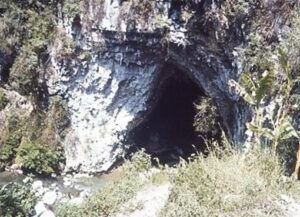
Mexico and they had university support from that professor up there and they could write papers about karst hydrology, but they were also looking for world-class caves that nobody knew about. And they had gone all the way to Chiapas and they were like within seventy-five miles of Guatemalan border, and they were told that there was a sinking river just north of San Cristobol de las Casas, the b the city in the mountains there, and they went to the village of Yochiv and Yochib and and Saltol

which is a Mayan language means sinking river. And Sumadero means sinking river. So it's a it's a it's a redundant name. Sinking river, sinking river. And a river goes into a cave. And and I think it's on the first page of my book, maybe the first paragraph, where we asked the locals where's that river go? And they said, Away. That's the way they saw it. That's all they knew for whatever whatever they knew, it went to the center of the earth. Whatever, you know. well actually they know better than that. In fact

fact

there's a cave near there and I think I even mentioned this in the book, named Tenehapa and the people there did a did a water tracing with crushed chili peppers and it came out in the next valley over and the people were unhappy with them they but they got a positive trace. Well there's one

Brandon Kowallis (19:26)
That's one way to do it.

Bill Steele (19:28)
But so, you know, I th what the Canadians said that piqued my interest, and this is sort of the craziness of it all, looking back, is that they said it was they'd finally found a cave that was impossible to explore. And and I of course I s I said w why? Why why would that be?

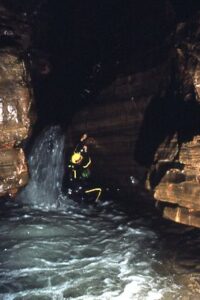
And and they said, Well, a river runs into the entrance and not far into it, the passage narrows, it's wall to wall water, fast current and there's waterfalls downstream. And it's damn dangerous. And we've been in there a little ways, but I don't think we're going back. So I was overly confident in those days and probably a bit cocky and thought I was one of the best in the world, you know,

so we went and we went with the famous Michael Boon who was one of those Brits, but he also he stood out. He stood out as a very eccentric guy. And he was sort of the father of cave diving in in the UK. And and he was a kind of a poet and a playwright and a and a really good writer. but he was also quirky, you know. Not everybody could handle him.

he just, you know, was a little too strange for a lot of people. To me he amused me. He amused me. And and right across the room here I got a picture he's he's passed away eleven years ago, but there's a picture of the two of us kinda face to face looking at each other and and we were a good team. I wanted to learn from him 'cause he was said to be the best caver in England.

Brandon Kowallis (20:58)
So Yochib is not like it's not the deepest cave in the world. I mean, it's 700 feet deep, which is relatively shallow in terms of like world deep caves. And I mean, for a lot of people out there, it's like 700 feet, like that's insane. That's like 70 stories. and it's not

freezing cold, but you mentioned there's a there's a decent sized river. There's a lot of caves out there with rivers going through it. So how does Yochib differ from a lot of kind of your standard river caves? What is it that makes it more exceptionally dangerous than your standard cave?

Bill Steele (21:35)
well, it's the possibility of a flood. You're in the tropics. Even if you go in the dry season there can be unexpected storms and that's

fact that it's wall to wall. There's not in too many places are the ledges to stay on. You're in the water. And there's waterfalls downstream. And a technique that we came up with, as simple as it sounds, was to have some one gallon milk jugs, plastic that are white. You can see a long way downstream. You can see Put a cord on float downstream, and where it

drops over the edge, there's the edge. There's the edge. And then you know and then you can measure that cord. You know how far it is. And then you belay actually belay a guy downstream. Ready to stop whenever they want to stop. And then when they get within, you know, three or four meters, ten or twelve feet of the edge, then they put in a bolt, climb up, bolt out over the waterfall and drop over there. So that was a technique that we did over and over and over again down through that cave.

Brandon Kowallis (22:35)
So I wanted to ask you a little bit more about that so you're either like walking on the wall or you're in this deadly water that could sweep you down and and throw you over waterfalls. I remember reading in your book and thinking, man, you guys are only like maybe

one two thousand feet back in the cave doing these like multi-day trips, which really isn't too far. And at first I'm like, what are what are they doing? That's taking so long. And and then I I read about the conditions. And my guess is that modern caving gear and techniques would probably make exploring Yochib maybe a little faster, a little less hazardous than it was in the seventies when you first explore it, but still super dangerous and slow going. But

I'm wondering if maybe you could talk about some of the equipment that you used and the techniques you used to explore Yochib and some of the challenges and limitations that presented themselves during the early exploration with the gear that you all used and the techniques you used back then.

Bill Steele (23:41)
Well these days I think a big difference these days would be that people would use battery powered drills. Well the thing about that is you gotta keep dry and batteries run out, you gotta have several batteries and they're heavy. We did it with hand drills. And

I'm not so sure that it's a big improvement to tell you the truth. Because you can ha you can ha hand drill a bolt in twenty minutes. And if you put one in with the drill it takes you five. Okay, you save fifteen minutes, but it also might not work. So really it comes down to the fact that if you got an electric a battery operated drill, you also need to have a hand drill with you. You know, but boy, I'll tell you what, young cavers ain't gonna buy that, not gonna buy that at all.

It's gotta be electric drill. Okay. Well we own in Huautla they're fast, sure. But boy, you know, if they get wet they don't work. And and if the battery runs out, you're gonna be glad you got that hand drill.

That's one thing. the ropes are pretty much all the same. The Brits wanted to use cable ladders in some places and that was okay. Especially when you pull yourself over on a canal line and you're in you're in in the turbulent waters from a waterfall to clip on your ascenders is a lot easier to have an ascender that you're c coasting along with and climbing that ladder. But I don't think people would want to climb ladders anymore and not that many people

So that's a big difference. other than that, you know, the big challenge in caving, the biggest challenge in caving that that isn't solved is communication. you know, mountaineers they just yeah, they talk on radios, pfft. You know, people in base camp at Everest talk to people on the summit. And I think

Brandon Kowallis (25:24)
Good point.

Bill Steele (25:24)
it's coming, it's coming, it's not here yet.

Brandon Kowallis (25:27)
Now what about lights as well? You were using

Bill Steele (25:30)
lights

are so different. yeah, we were using carbide and and and and a backup electric. In fact, first time I did Yochib we didn't even have mounted electrics next to a carbide. We had little

inexpensive flashlights that we would open up and fill with Vaseline. That's how we waterproofed it. And it actually worked. And then we put in our mouth. We would swim these canal with it was right in our mouth. And then it would have a cord in case you coughed and you dropped it or whatever, but it actually worked. I had

Brandon Kowallis (26:05)
Those carbide

lamps are not ideal in in wet caves like Yochi.

Bill Steele (26:09)
Well, you it's water sprays all that puts out. and and there was that. And there's those little tip protectors that would keep that from happening for the most part. we did it with carbide lamps.

Brandon Kowallis (26:23)
So were there any other rigging challenges that you can think of that you faced, particularly in Yojib?

Bill Steele (26:29)
we played around with things like traverse lines along the wall, Tyrolean traverses out in free space. and we

messed around with technique.

back in the day with eleven mil rope there weren't reblays and redirects like there are now. And now some cavers are even wanting to go to smaller diameter rope from nine. You know, we've been using ten and nine in Huautla. but, you know, we had some seven this year which may be Yeah.

Brandon Kowallis (26:58)
wow.

Bill Steele (26:59)
And they say, Well it's push rope Well, you know, I get it, but

Just just rig it with nine and you can derig it if it doesn't go, you know, but it's you just gotta be so damn careful with that kind of stuff. I did a four hundred foot pit in China that had rebelays down the wall about three or four and the last one had an eight mil to the to the bottom. Ugh. It was really bouncy and I was real worried it would rub against the wall. I don't like it.

Brandon Kowallis (27:26)
Yeah, seven

would scare me. I mean you've you've got somebody on rope, you just have to flick it in the middle and it snap. So there

Bill Steele (27:31)
Yeah, but but there's

some people trying to go that way.

Brandon Kowallis (27:34)
there was one passage that I loved in your book. It said, the redundancy of a second safety point increases protection, decreases machismo, and enhances life expectancy. And I I thought about that. I just remember like some of the early exploration in main drain, and we would do these really hairy climbs without ropes.

Because it was just faster. But I remember thinking like you're 800 feet deep and you're doing this like sketchy waterfall climb where the holds are breaking off. And some of the guys were like, it's fine, it's fine. And and and I'm sitting there thinking, Yeah, it's fine if you don't fall, but if something breaks and you fall, like you're screwed at this point because you're so deep in the cave and it's cold.

like you're gonna be dead before they can get rescue back here to ya.

Bill Steele (28:22)
We had something happen this year in Huautla, almost exactly the same time as that Facebook post. First week of of expiration. We had an accident. It was a British caver who happens to be a physician too and he was a very experienced guy.

He's now the leader of the project in Mulu, Borneo, those vast big caves over there. but he took a fall, took a took an eight meter fall, broke his leg, got a deep cut in his in his foot, rock cut through his boot, and he was four hundred and fifty meters deep right at the beginning of the expedition. So, you know

We rescued him, we got him out and you know, he got doctored at the local clinic. But you know, then you question, well, how could have that been avoided? And and and f found out that there'd been a discussion about that drop. You know, do we need to rig it or not? And they didn't. Well, my point then was if you have a discussion about whether to rig a place or not, rig it.

It's not that we had a minimal amount of rope. We had plenty of rope. And then a guy falls and gets hurt on that drop. We had another guy years ago in Huautla who who said we don't need a rope on that drop. No, we don't need a rope on that drop. It was a minimal drop, you know, five meters maybe. And so that so others said, Well, yeah, we do. Let's put a rope here. Well that guy that said we don't need a rope didn't use the rope.

I don't need a rope. And he's the guy that fell on that climb and broke his wrist. I don't

Brandon Kowallis (30:03)
My gosh.

Bill Steele (30:03)
even need to say anything in that case. He made the point.

Brandon Kowallis (30:06)
Yeah.

Bill Steele (30:08)
But I still do bring it up to him once in while.

Hey, do you remember? But

Brandon Kowallis (30:13)
Yeah, you remember that time when we told you and then

So I wanted to maybe jump forward on the

Yochib

timeline when you were wrapping up the exploration. Two people, Norm Pace and Jill Dorman,

Bill Steele (30:27)
Well Pace's story was there was a there was a failure in the rigging and there was a cable ladder Whatever it whatever it was, he got about fifteen feet of slack in the canal line.

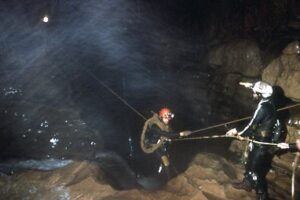
you canal line means a horizontal line down the canal to pull yourself with and you don't even need to clip into it.

sometimes it's a it's a it's a good idea to not clip into it, in case I don't know, something happens and you wanna be free of it. But I used to just just slide my hand down a rope with the current and then they go back upstream. In fact out in the garage I got a six hundred foot spool of three eighths inch polypropylene yellow so and and it's for a canal in a cave here Texas and it floats and it's bright. You can see it. And and you know, four people can pull themselves up a canal on one rope.

But what happened there was pace was climbing.

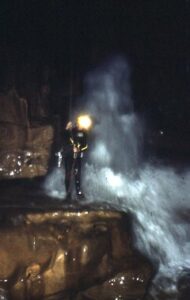
the top and he got whatever, he got fifteen feet of slack and he was hanging in a loop of the rope right next to a thundering waterfall. Not in it but right next to it. So he was getting spray from it and nobody else was at the bottom of that drop. He was the last guy up coming out and he got this slack and the people that he was with really thought he'd perished. Really thought he'd drown.

Brandon Kowallis (31:58)
Didn't they look down there and see his light kind of like moving around and they thought he just his body's

Bill Steele (32:01)
Yeah, bobbing around and he was hanging there in

this loop and he it would have been real hard to help him. But they they just thought he was lost.

he was able to to get out of that situation and climb up and when they saw him it was like an apparition. I mean they just really, really didn't know what to say. They thought he perished. They really did.

He saved himself really. He figured it out. And then the Jill Dorman thing

The day before we'd gone in on the last derigging trip to pull some duffel bags of gear out. They had gone out th come out the day before and everything was supposedly out of the cave. But then when we inventoried it there was a bag missing. Darn, you know, somehow that got left.

And so we had to rig the cave again to go and look for it. and it was looking like storms were coming. So we were worried about it. We thought, you know

And we went in, we found that bag, it was three of us, Jill was one of the three. And then when we got to the what what I call the violent lake, this lake with this big waterfall falling in it on the other side with these standing waves and everything. when I saw brown water and leaves, that could only mean one thing. It's raining really hard outside. And what I didn't realize and I know now, is that

There's two pulses.

when a cave's flooding, one is the immediate catchment close to the entrance. And that's what washed in that that soil, brown water and and leaves. But then there's the big catchment. And that's the big flood. So we were just thinking we were dealing with this initial one. well, you know, flooded a little bit. That's not all was about to happen. So I grabbed Jill 'cause didn't need three of us to get that one duffel bag up that one drop and out of the cave. And I said, Get out of the cave. Get up

that rope and out of the cave. Just go on. We'll be all right. And then we dealt with that duffel bag to to get it up that drop. I think Gary climbed up it and he pulled it up. Then I came up, derigged the rope, went around the corner and and that's when we saw two people coming in. It was Boone and and and Blake Harrison coming in to help. But they were really walking into a death trap. They didn't really need to come in. We only had one duffel bag and two people. But they were coming in to help anyway. And they walked into a

Death rap.

and the thing about that passage was it's a thousand feet long, you can see the other end, you can see daylight out there, it's it's shaped like a cathedral. It's tall, it's a hundred and twenty feet high and a hundred and twenty feet wide and as straight as an arrow

And then when they got to us, right when they got to us, one of s looked toward the entrance and said, Look and when we looked, my

God, you know, there was the tsunami. There was a wall of water down the passage. And so there was a boulder right there. We climbed up on that, but we knew that it would inundate that. And there was a seventy five foot waterfall right behind our backs. And that's when I I said something that I shouldn't have said. And I learned a lesson there and that was we're gonna die now. Well, that's a showstopper right there. I

Brandon Kowallis (35:17)
Yeah.

Bill Steele (35:18)
talked to a couple of s combat vets

That said, you don't say that. Even when you think it's a certainty, you don't say that. Because some people shut down. Totally shut down. Quit. Gonna die. Okay. And that's what happened. Two of those guys just went like catatonic statues, just immobile. Not the Brit. Not Michael Boone. He was anything but that. He just came totally alive and started looking around and he said, No, I think I can get to that wall with a rope.

as you look out the entrance, look toward the entrance from inside the cave, there were ledges on the left wall that were above the water level. But on the right wall there were no ledges, no wide, easy ledges and none down low by water level.

But what he did was he dove in. and there was a there was a sluice there. There was a f really flat fast current. And he

Brandon Kowallis (36:16)
Whoa, so he

dives into that?

Bill Steele (36:18)
Yeah, he dived into that, And 'cause it was strong water and we had a waterfall real close you know, fifty feet downstream and we had just come up a rope up that, seventy five feet deep into a into a lake. It actually didn't land in water down there, it landed on a big flowstone mass, so you didn't want to go over that.

And so he dove in to the current on belay. I was belaying him and he got washed downstream just instantly. And he climbed back up on the boulder and said, Wrong angle. That's always wrong

Brandon Kowallis (36:50)
Oops.

Bill Steele (36:51)
angle. I need to go more upstream when I dive. So he dove in kinda at a a diagonal upstream and and then swam like Johnny Weissmaller.

mean, is incredible to see him swim like that. Damnest thing I ever saw, I'll never forget it. And and and he still got washed downstream, but he was farther out when he got washed downstream and he made it to the wall and and there the water was calmer and there was actually a upstream eddy flowing along the base of the of the wall. And and he was washed upstream and even with us. And so he gotten washed downstream and then that eddy took him upstream so he's even with us and

then he scampered up the wall and there was a ledge it was about eighteen inches wide up there and there was something a projection or something he tied the rope off to. Yeah yeah.

Brandon Kowallis (37:41)
And yet the water is probably still rising. It had didn't it didn't just

Bill Steele (37:44)
yeah yeah yeah yeah yeah yeah. yeah. Yeah.

Brandon Kowallis (37:47)
So the clock's ticking.

Bill Steele (37:48)
Yeah, sure. And I was standing in a loop but those other two guys were were just kind of catatonic as standing there 'cause they believed me when I said we're gonna die now but I was actually wrong.

And so I woke up and stirred up I guess. And they went across the rope one at a time. Just holding on with their hands and and then yeah, I mean

Brandon Kowallis (38:09)
Are they like dragging in the water too? Is there?

Bill Steele (38:12)
their heads were above it. In fact one of

he he got ducked and only his hands were out of the water holding on that rope and I and I remember his white knuckles, those are what they called the death grip. Both hands were gripping that rope 'cause that was it, boy. And his knuck I can remember his white knuckles, you know. He was holding.

Brandon Kowallis (38:31)
Did he have like a

like a cow's tail or something clipped into it?

Bill Steele (38:34)
No,

it we didn't have back then. We didn't use Yeah, it didn't have and that

Brandon Kowallis (38:38)
Just your knuckles, that's all you had.

Bill Steele (38:40)
also t connects you to the rope too, so but I I think a cow say will have been a thing to do. But he didn't clip an ascender on it or anything. But he he just did it with his hands and then he made it. So now I'm there alone and I'm in a loop. I'm standing in a loop 'cause I didn't want to lose that rope. And and I have the duffel bag that we went after. I don't wanna

it that was the whole point of that trip, you

Yeah I got out I got out of the loop and I tied the I tied the rope to So

Brandon Kowallis (39:03)
It's just funny that the cave is flooding and you're gonna die and it's like worried about the bag.

Bill Steele (39:08)
so I tied the I I got out

of the loop. I got out of the loop. I tied the No it did let me think about it.

Yeah I got out I got out of the loop and I tied the I tied the rope to the bag. So

that we didn't lose it. And then and then I let it have me, meaning the current. It had me with the duff because the duff was buoyant. And for some

anyway, it did a pendulum against the wall and then I just hand over handed up the rope, climbed up and we're safe. So we pulled the duff up and then we found ledges and climbed all the way out horizontally to the entrance, which is almost a thousand feet, but we managed to find a route, which hadn't been done.

had we not found a route, I think we could have sat it out. Stayed up high on some ledges and just wait until it falls, even if it's twenty four hours or something like that. And then

Brandon Kowallis (40:03)
So once you got across

it wasn't just a hop, skip and a jump. It was it was some s

Bill Steele (40:06)
It probably took

a good forty minutes to pick our way out. And we had an audience. We had the the other cavers there outside sitting there within sight. We could see So watching them.

Brandon Kowallis (40:16)
They're just helpless. There's

nothing they can do.

Man.

Bill Steele (40:22)
And you know, I see one of those people every once in a while and they just walk up and say, my god And then I I

Brandon Kowallis (40:29)
So what was it?

Bill Steele (40:30)
actually had a girlfriend with me there

Brandon Kowallis (40:32)
Uh-huh.

Bill Steele (40:33)
and I remember her telling me, I didn't know what was happening. Good.

Brandon Kowallis (40:41)
Yeah,

yeah, good. That's good. That's better. What what happened? What was it like when you got out of there finally?

Bill Steele (40:47)
I don't know. It was amazing how much hail there was on the ground and and how beat up their their thatch roof houses were and they were sort of like subdued sort of beaten down the locals were like that was a hellacious storm, just a you know, a beat up weather event. And then and then for us to be around and us to be in that cave when that happened, they were just they thought we were nuts anyway to be going in there. What the hell would you drive all the way down here for? What'd you get out of there?

Knowledge experiences.

Brandon Kowallis (41:18)
Wow. Well, you must have

br breathed a sigh of relief when you finally like stepped free of the

Bill Steele (41:26)
Hey, I'm gonna live

on. I'm I'm not dying at twenty seven or twenty eight like it it looked like I was. In fact, as far as I know, only one person's ever been back.

to that cave.

And that's

Brandon Kowallis (41:39)
Really?

Bill Steele (41:39)
yeah, Scott Davis. He's a d great friend of mine. He he lives in Flagstaff, Arizona and he had still does, a river running business. He's the main guy on the Grand Canyon, has been for years. He owns a a rafting company there. He actually o he's the outfitter. He's the guy that owns all the rafts and everything that people rent from him. But he's done the Grand Canyon, you know, probably two hundred and fifty times, something like that.

And he went there with some clients that were kayaking in Chiapas on on some rivers and they went over to Yochib and they took their kayaks down to that lake at the bottom of that first waterfall and played around in that lake.

Brandon Kowallis (42:20)
so they kayaked into the cave?

Bill Steele (42:22)
Nah, I think they just lowered downstream and down that down that waterfall and into that lake just to play on the standing waves in the lake. And shoot video which was televised. I saw it. And then they also went down to the deepest point in the cave, which is not where the water goes. The deepest point in the cave is actually an an overflow route where the water used to go. It's not the current route. And we never went down there. I would really like to see that someday 'cause there's a big room down there.

Brandon Kowallis (42:48)
What did those guys have to say about the cave?

Bill Steele (42:51)
Scary. That's what they said.

Brandon Kowallis (42:55)
I went to a presentation, it was Robbie Schone that was going over the flood in the in the the world's deepest cave. So he was down there and started a flood. And and he talked about like even after he got out and was safe, he kind of felt as though there was this like constant shadow of death that was trailing behind him, just like ready to snatch him up.

And I imagine you probably felt like that at times in Yochib like the cave is like constantly just trying to take a bite out of Bill Steele.

Bill Steele (43:30)
Yeah, I think so. I th and you just gotta like not let it happen. W you know, g realize that it's trying to get ya and just keep your guard up.

Brandon Kowallis (43:39)
Isn't that amazing? Like just it's a it's a mental game. Caving really is a mental game. I remember it was do you Peter Hartley? Did you ever meet him? He's a he's a British caver. but I remember we were down, we were down in a

deep cave and and one guy was really struggling. He's like, You want to know the secret? He's like, you just have to accept where you are right now and just be in that moment, forget about the fact of where you have to go and just take a step.

And then you take the next step. You don't sit there and think, I've got a thousand feet of rope to climb. You just think I've got a step to take. And as soon as you change your mindset, then it becomes a a lot easier. And people who freak out, then they get themselves in these really bad situations.

Bill Steele (44:23)
Yeah.

fact I I it brings to mind a an incident one time in Huautla when and I always like to bring up the rear. That's just me. some people like to dash out ahead and get out first, you know. And I'm not that way. I I like to make sure everybody ahead of me's okay. And I I don't mind staying in the cave longer. It's why I came, you know, and not in a hurry to get out. And so there was a a fairly green fellow with me, never been that deep before and we're watching somebody climb a rope and we're deep, you know

We're six, seven hundred meters deep. Why be in a hurry? It's gonna take ten or twelve hours to climb out of here. And and all of a sudden he says, You know, I don't even know if I can make it out of here. And I said, What are you saying? what I'm not leaving you here. You're gonna get out of here. He said, Well I got so many ropes to climb. And I said, Well, I don't know, I just see that one. That's the one I'm thinking about.

there and he W are you fooling yourself? You know there's about forty more. I said, Well I I'm not dealing with them yet, I'm dealing with that one And and he said, God, that's just a way of thinking about it, isn't it? And I said, I guess I guess, but it doesn't do me any good to hurry. And I'm gonna bring up the rear anyway, so, you know, enjoy enjoy it while you're here. That's that's what you came for.

You know, it's it's it's almost like a metaphysical thing in a way. And the editor of my Huautla book didn't want me to get into that.

but there's been some real close calls that were hard to believe that it

climbing n next to a waterfall one time, just way too boldly and there was a pit below and and I peeled, you know, I started to come off of it. And I was just grabbed. Just like Bruce Lee move and there was a handhold there. And it almost felt like I was pushed back up from the back. And I s I just so told that story in a couple of paragraphs how it felt, what it felt like at the time. He said, nah nah nah

recently really wanted to dive into that kind of thing, you know, because there's been a whole bunch of close calls in Huautla that just seem like they could have easily gone the other way but they didn't. And in fact one time w we still got this place in Huautla, it's probably the the whole northeast quadrant of the karst drainage basin where we've worked our way up that way from within the cave from six hundred meters deep parallel on the surface.

But there's some entrances up there we haven't been able to do because the local people up there just don't want any foreigners around. when we went up there with a

staff in Huautla just a few years ago. we asked for the head of the town, the head of the village and we thought we would be shown to the home of the elected guy, but we weren't. We were shown to the home of a of a spiritual guy. And and in a dirt floored house a wife cooking in the corner on an open fire in the house and

He spoke no Spanish, but this guy could translate. he he spoke Mozateco and Spanish. And at one point this guy looks across the room and at me at me and he says, Have you seen any spirits in the caves?

And I said, No, I haven't seen any. But if they're there and I can't see I think that they welcome us because these caves seem friendly and not all caves do. Some caves seem threatening to me for whatever reason that might be. Loose rocks above my head, maybe a venomous snake in the entrance. I don't know. Something that I'm picking up on that I don't see. but not Huautla

always seemed very friendly, very welcoming. And you know what, that guy liked that. He liked that answer.

Brandon Kowallis (48:19)
That's awesome.

Bill Steele (48:21)
And in fact it just just a couple of years after COVID when we started going back down there, 'cause we skipped two years, I was in this interesting artisan store in a little village close to Hauatla in San Andres and looking at some cool pottery, think about buying a piece. I always bring something back for the house from there. And

Guy walked over the the the shopkeeper and he said, people say that you guys take things out of the caves Is that right? And I looked at Anna Diaz, who's sort of our best diplomat. She's from Spain originally and lived in Mexico for years and now lives in Houston. And I kinda winked at her and I decided to try a different approach. 'Cause I've always said, No, no, we don't take anything out of the case. Nothing. So I said, Yeah

We do, three things. He looked sort of startled. Like, what? What I expected. I said, number one, knowledge of what's in there that we will share with the people that live here. Because you deserve to know what's beneath your homeland. And we're able to go. We got the experience, expertise and the equipment to do it. Number two, photographs of what's in there.

Can see what we've seen. And number three, experiences which enrich our lives. Because the most memorable moments of my life have been here, going in these caves. And that's very important to me. And when we left, I said to Anna, God, why was it that third thing that he smiled so big about that he caught on to, that he agreed with? Not the knowledge, not the photographs. And she said, Well, think about it. What w what

they deal with all day long, every day of their lives. They deal with what's happening here. They don't follow what's happening in the world. The it's just is that's out there. This is here. He understood that. He gets it. Enrich our lives. That was what he liked. He he liked that. He got he got that. And then somebody later, I think I think a year or two later repeated that to me. That had gotten around. That's what the cavers this is what the cavers say.

they come here for experiences. Yeah, that's really cool. Not not affected at all.

Brandon Kowallis (50:37)
that's awesome. Yeah. Well, I

the it's the final paragraph in the Sumidero Yochib book. It says, Sumidero Yochib had had merely tolerated us. I felt respect for the dangers of this cave, as well as fear and apprehension. At times we had experienced emotional stresses, but we overcame them. What we conquered was not Sumidero Yochib but ourselves. We conjured from our beings the strength.

and the will to explore this grand cave to its end. And we all came back alive. And yeah, and I I I really like that. And I think that today, like there's a lot of people today that wouldn't even consider pushing themselves in the way that you all did in Sumidero Yochib and Huautla and

And and sometimes I fear that as a society we're kind of shooting ourselves in the foot, the more risk averse we become.

Bill Steele (51:35)
I don't know if I sent you that article. I wrote one called Close Calls and it got published in Ill Illuminations. And here's what happened

Brandon Kowallis (51:41)
Yeah, you did.

Bill Steele (51:42)
with that. I speak on cruise ships these days in retirement. And I've been all over the world s telling caving stories on cruise ships.

I went over to New Zealand. And I've told young cavers, Watch watch your reputation preceding you. And and because if you've written things and been around a while, people may know who you are and they want to impress you with their cave, you know. So these Kiwis, as are these New Zealanders, wanted to take me to a cave they hadn't been to in a long time and they'd never been there in high water. So here we are going to this cave with high water.

an entrance entrance trip it's gonna take six hours to go from one entrance to the other.

And we went down some ropes and then it was all stream passage for several hours. And about halfway through this leader of the group looks at me and he goes, Well, you got the thickest chest o of us. I hope you fit through the far entrance. I'm like, I'm gonna go all the way there six hours and I don't fit and I gotta go all the way back for six hours. yeah, I'm committed. So we get within two hundred feet of that far entrance, and it's winter in New Zealand. It's summer in in northern hemisphere, it's winter there, and it's snow melt running in this cave. It's icy. And

And they told they they said, well the hit the the tight spot's coming up and I watched this guy go into a pool of water with a V-shaped opening above it. He's gonna coast his face through there, and I do a lot of low air

space no problem. So I thought that n that's cool, is that it? So I go over there and I reach underwater and sh hey that's that's not so small. Zip right through it. then I see the tight spot. ho. It's like the ends of two loaves of bread. And I really thought, man, I can't get there through my helmet on. don't know if I can get through there at all and I'm trying to get my body in position to pop through there. I'm two hundred feet from the far entrance and I get my hands stuck in a slot underwater.

and and I can't get it out and snow

Brandon Kowallis (53:37)
Your head's still above water though, right?

Bill Steele (53:39)
Yeah, but right up to my chin. And and and and there's water running in. It's not flooding but it's ice melt, I mean snow melt running in on me. And then the guy ahead of me comes back and when he sits there trying to pull up on my collar, which really didn't help, it's my hand.

He then I really I said, You're not helping me, just go on and let me work on this. And that's when the thought occurred, here's how you die in a cave. Because I felt hypothermia coming on. And I'd only had that happen one time before in Montana where where I felt tunnel vision closing in and my vision's gonna get s little spotty, I'm beginning to shiver, and I thought

I gotta just make the right move and get that hand unstuck and get through here. And I did. And I did. I got it out. I got through the tight spot on the surface, I'm safe. And then back home, you know, people asked me, Well, were you scared? Did you panic? You know I said, I said, I can and this is the truth.

I consider those emotions but they don't help. And I realize they don't help. I gotta keep my calm, a cool head and I gotta make the right moves to get out of here. because I wanna live. I wanna live to be a really old guy. And and I came home and told Diana, my partner here about it and she said, Well, how many close calls like that have you had? I don't know. I haven't kept a list.

I don't know, fifteen. And she goes, You know how women can be. She scoffed at that. Yeah, right. Fifteen, come on. I don't know. I told you I don't know. So th so over the next week I I I had my phone with me and you know, as I was sitting at a stoplight and read yeah, yeah, yeah. Write down. So finally I went to her and I You mean you remember how you didn't buy that it was fifteen close calls? Yes. I said, You were right, it wasn't.

It was seventeen. There's my phone. There's the list.

Brandon Kowallis (55:39)
Yeah.

Bill Steele (55:40)
Seventeen. So then I wrote that article. Close calls. I wrote an article about it, just sort of listing what they all were. Yochib was one, Big Rockfall in Huautla's another, a couple other floods in Huautla or others, you know, things like that. The truck wreck and Huautla

Yeah. Yeah. Well I'm I'm happy I'm still alive.

Boom Rumble (55:58)
you

Outro (55:59)
Hey everyone,

this is Brandon. Again, one last thing

Music (56:01)
you

Outro (56:02)
before you take off, and that is if today's show has brought a little excitement into your life and wisdom to your mind, please do what other thoughtful and caring listeners do and share the show with someone you think could maybe use a little adventure in their own life. Also, be sure to check out the show notes where I include any additional information that you might be interested in if you would like to learn a little bit more about today's guest. As always,

Be sure to share your thoughts and feedback in the comments. I love hearing from you and learning from your own insights. And until the next episode, as I always say, I would much rather be creating my own adventure stories by going out and living life than watching someone else's stories while I'm sitting on my butt in front of the TV. And I hope that you

will do the same. Just please don't do anything too stupid.